
Why Third-Party Peptide Testing Matters

Third party peptide lab testing is not a marketing flourish. It is the difference between asking researchers to trust a label and giving them independent analytical evidence. In a category where purity, identity, endotoxin burden, and batch consistency can materially affect non-clinical research, verification should be treated as the baseline, not the premium tier.
Key Takeaways
- Third-party testing reduces reliance on supplier claims by separating commercial incentives from analytical verification.
- HPLC purity alone is useful, but it should be paired with identity confirmation and contamination screening.
- Batch-specific reports matter because peptide quality can vary across manufacturing lots, storage conditions, and handling chains.
- Transparent suppliers publish usable data, not vague certificates that omit chromatograms, methods, or test dates.
- For Canadian researchers, domestic fulfillment only matters when paired with documented quality control before release.
Why is third party peptide lab testing the baseline for trust?
Third-party testing matters because peptide quality cannot be judged by packaging, reputation, or a single purity number. Independent laboratories can evaluate whether a batch matches its stated identity, purity, and safety-related specifications before it reaches a research buyer.
The peptide market has a structural trust problem. Buyers often see certificates of analysis, but not all certificates carry equal weight. A supplier-generated COA may be accurate, incomplete, outdated, or based on representative material rather than the vial in the current lot.
That is why a public batch archive, such as the Vital Aminos Lab Reports page, is more useful than a generic statement that products are “tested.” Researchers need to match the vial, lot, and report, then read the analytical evidence.
Compounded and research-use peptide categories are not interchangeable, but the quality lesson is similar: products outside conventional drug review demand stronger verification. Compounded drugs are “not reviewed by the agency for safety, effectiveness or quality,” according to the FDA.
The position is simple: if a peptide supplier cannot show independent batch data, the buyer is being asked to absorb uncertainty that the supplier should have resolved before release.
What should a real peptide test report prove?
A credible peptide report should prove at least three things: the peptide is what the label says, the main peak is sufficiently pure, and the batch does not carry unacceptable contamination indicators. HPLC is central, but it is not the whole quality story.
High-performance liquid chromatography separates the primary peptide from related impurities, deletion sequences, residual synthesis byproducts, and degradation products. If researchers need a closer look at chromatograms and peak interpretation, this internal HPLC purity verification guide gives useful context.
Mass spectrometry adds identity confirmation by checking molecular weight. That matters because a visually clean HPLC trace does not, by itself, prove that the dominant peak is the intended molecule. The strongest quality programs pair purity analysis with identity testing.
Endotoxin testing is a separate concern. It does not measure peptide purity. It screens for bacterial endotoxins, which are pyrogenic contaminants derived from gram-negative bacteria. For research buyers comparing suppliers, a complete testing posture should distinguish purity, identity, and endotoxin results.
HPLC separates the peptide of interest from impurities, while mass spectrometry helps confirm molecular identity, according to Prodigy Labs. A report that includes only a purity percentage may answer one question while leaving the identity question unresolved.
A usable report should include the lab name, test date, sample or batch identifier, chromatogram, purity percentage, method reference, and identity or endotoxin results where applicable. Missing fields are not minor details. They define whether the report can be audited.
Why are in-house COAs not enough for research peptides?
In-house COAs are not automatically worthless, but they are not equivalent to independent verification. The issue is incentive alignment. A supplier has a commercial reason to release inventory, while a third-party lab has a narrower analytical mandate.
The conflict is not personal. It is procedural. Even careful suppliers benefit from external testing because it gives buyers a second line of evidence. Independent review also catches documentation gaps that internal teams may normalize over time.
For buyers browsing a broad peptide catalogue, such as the research peptide category, the key question should not be “Is there a COA?” It should be “Can this COA be tied to the exact batch, method, and independent lab?”
Weak COAs tend to share warning signs. They show a round purity number with no chromatogram. They omit the testing laboratory. They lack a batch identifier. They recycle the same report across multiple listings. They do not distinguish “typical purity” from the tested lot.
Reputable suppliers commonly provide HPLC reports showing purity thresholds for research peptides, and lower purity may be acceptable only in specific contexts, according to Baltic BioLabs. The key is not the number alone, but the evidence behind it.
Third-party testing should not be treated as an accusation against the supplier. It is a control mechanism. Serious suppliers use it because quality systems are stronger when claims are independently checked.
How does third party peptide lab testing reduce experimental risk?
Third party peptide lab testing reduces experimental risk by limiting uncertainty before a peptide enters a protocol. When purity, identity, and endotoxin data are visible, researchers can make better decisions about suitability, controls, storage, and repeatability.
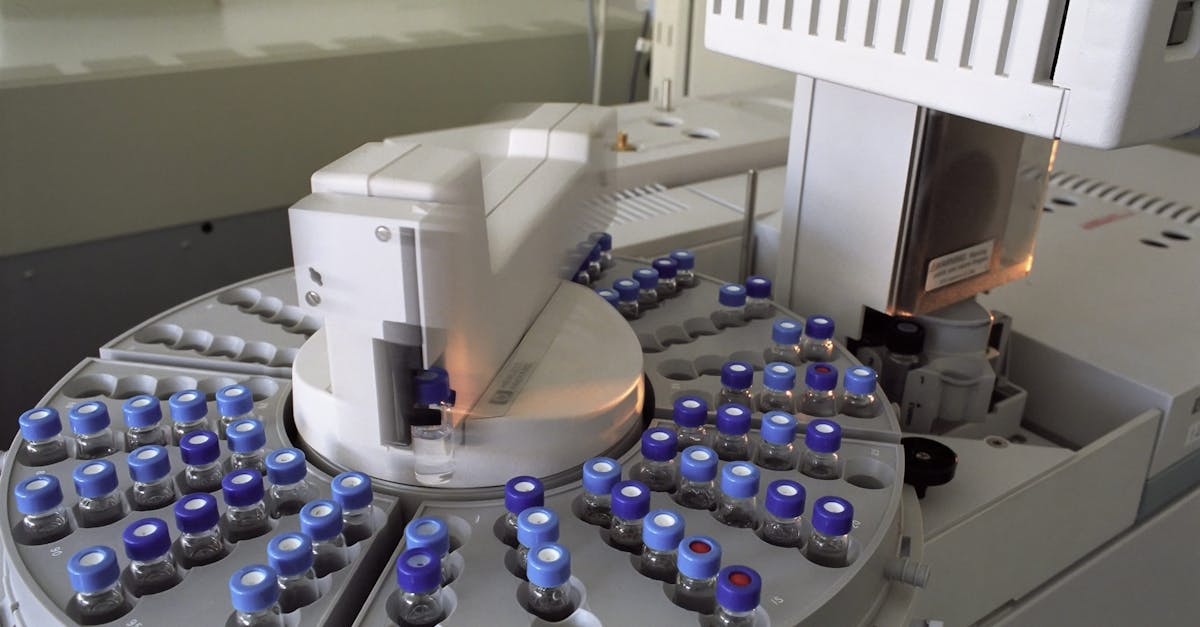
Research variability is expensive. A poor batch can produce ambiguous results, failed replications, contaminated controls, or misleading biological signals. The cost is not just the vial. It is the time, labour, reagents, animals or cell models, and interpretation burden attached to the study.
Consider a peptide such as BPC-157 10MG, where research interest often centres on tissue-repair pathways in non-clinical models. If the peptide identity or purity is uncertain, downstream observations become harder to attribute to the intended compound.
Testing also protects against false confidence. A peptide that appears lyophilized, sealed, and professionally labelled may still carry synthesis-related impurities or degradation products. Quality is analytical, not aesthetic.
Endotoxin is a good example. It is invisible to the buyer, but it can influence inflammatory readouts in sensitive models. That makes endotoxin reporting highly relevant when protocols involve assays where immune activation could confound results.
USP <85> is a harmonized standard for bacterial endotoxins testing, according to USP. For peptide research, the broader principle is clear: contamination controls require defined methods, not assumptions.
Better inputs do not guarantee perfect experiments. They remove avoidable uncertainty. That is the real value of testing: fewer unknowns entering the study design.
What does transparency look like before a peptide is released?
Transparency means the supplier can show what was tested, who tested it, when it was tested, and how the result connects to the product being sold. Anything less forces buyers to infer quality from incomplete evidence.
A mature peptide quality workflow starts before publication. The batch is manufactured, sampled, sent for independent analysis, reviewed against release specifications, and only then made available. The report should follow the batch, not appear later after buyers ask.
Vital Aminos positions this standard around ≥99% HPLC purity, independent testing before release, and published HPLC, mass spectrometry, and endotoxin documentation for research-use products. That is the direction the category should move: verifiable quality as standard infrastructure.
Transparency also includes limits. Research peptides are not for human consumption, and buyers should review supplier terms carefully. The site’s Legal Disclaimer & Terms of Use reinforces that these materials are sold for research purposes, not clinical use.
Good transparency is boring in the best way. It makes fewer claims and shows more documents. It lets a technically informed buyer inspect the evidence without needing to contact support for basic data.
What should Canadian researchers ask before ordering?
Canadian researchers should ask whether each peptide has batch-specific third-party testing, whether reports are publicly accessible, and whether the supplier ships under a clear domestic fulfillment policy. Speed is useful, but only after analytical release criteria are satisfied.
The practical checklist is short. Ask for the batch number. Match it to the report. Confirm HPLC purity and identity testing. Look for endotoxin results when relevant to the model. Check the testing date. Make sure the document is from an independent laboratory.
Fulfillment matters after quality is established. Domestic shipping can reduce transit complexity, but it does not replace analytical verification. For Canadian-only purchasing expectations, review the supplier’s Shipping & Fulfillment Policy alongside lab documentation.
Buyers should also be wary of impossible certainty. A supplier claiming every peptide is flawless without showing data is less convincing than one publishing traceable reports, specifications, and support channels for batch questions.
The best purchasing habit is to evaluate peptides like research inputs, not consumer products. The label starts the conversation. The lab report finishes it.
Frequently Asked Questions
Is third party peptide lab testing the same as an internal COA?
No. An internal COA is prepared by or for the supplier’s own quality process. Third-party testing is performed by an independent laboratory. Both can contain useful data, but independent testing carries stronger evidentiary value because the analytical reviewer is separated from inventory release incentives.
Is HPLC purity enough to verify a peptide?
HPLC purity is necessary, but it is not always sufficient. It measures how much of the sample appears as the main chromatographic peak. Identity confirmation, commonly through mass spectrometry, helps verify that the main peak corresponds to the intended peptide rather than another compound.
Why does endotoxin testing matter for research peptides?
Endotoxin testing matters because bacterial endotoxins can influence inflammatory or immune-sensitive assays. A peptide may have high HPLC purity and still require separate contamination screening. Purity, identity, and endotoxin burden answer different quality questions.
How often should peptide batches be tested?
Each production batch should be tested before release. A report from a previous batch does not prove the quality of a new batch. Manufacturing variation, handling, storage, and degradation can all affect analytical results, so batch-specific documentation is the standard researchers should expect.
Are Vital Aminos peptides intended for human use?
No. Vital Aminos supplies research-grade peptides for non-clinical research use only. These products are not for human consumption, diagnosis, treatment, or prevention of disease. Researchers should review lab reports, product details, and legal terms before purchasing or using any compound.