
Peptide Purity Testing and Verification

Peptide purity testing is the evidence layer between a claimed sequence and a research-ready material. For Canadian researchers and laboratory buyers, the strongest verification workflow pairs chromatographic purity, molecular identity confirmation, contamination screening, and batch-level documentation that can be reviewed before a vial enters a study.
Key Takeaways
- HPLC purity percentage reflects chromatographic peak area, not full chemical identity or biological suitability by itself.
- LC-MS or mass spectrometry verifies whether the main peak matches the expected peptide mass.
- A credible peptide CoA should connect purity, identity, endotoxin, batch number, method details, and release date.
- Third-party testing reduces supplier bias, but buyers still need to inspect chromatograms and report consistency.
- Research-grade peptides should be handled as non-clinical materials unless explicitly approved for another regulated purpose.
What is peptide purity testing?
Peptide purity testing is a set of analytical checks used to estimate how much of a peptide sample is the intended target versus related impurities, synthesis byproducts, salts, residual solvents, or contaminants. The most common purity readout comes from reversed-phase HPLC or UHPLC, while identity is usually confirmed with mass spectrometry.
In solid-phase peptide synthesis, incomplete coupling, deletion sequences, oxidation, deamidation, and protecting-group remnants can create impurity peaks. That is why buyers should treat a single “99%” number as the start of review, not the entire review. Vital Aminos publishes batch documentation through its lab reports page so researchers can compare the claim against the underlying analytical records.
Peptide purity testing should answer four separate questions: Is the major component present at high chromatographic purity? Does the measured mass match the intended sequence? Are microbial or endotoxin risks controlled for the stated use? Does the documentation trace back to a specific batch?
“The purity of synthetic peptides is usually measured by reversed-phase ultra-high-performance chromatography with ultraviolet detection, according to Almac. That statement is useful because it separates a common purity method from broader release testing, which may also include identity and contamination assays.”
How does HPLC measure peptide purity testing results?
HPLC separates peptide components by their interaction with a stationary phase and mobile-phase gradient, then detects peaks as they elute. In peptide purity testing, the reported purity is often calculated from the target peak area divided by total detected peak area at a defined wavelength and method condition.
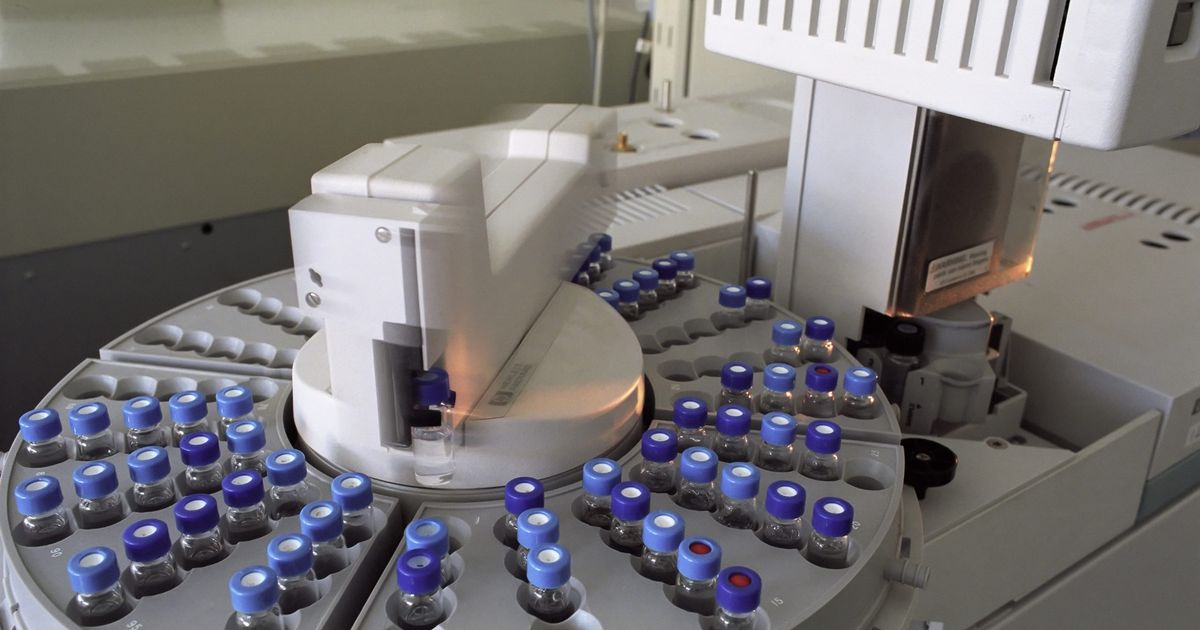
Reversed-phase HPLC is common because peptides vary in hydrophobicity, charge state, and sequence length. A C18 column, water and acetonitrile mobile phases, and an acid modifier such as TFA or formic acid are typical, although exact conditions should be method-specific. For a step-by-step interpretation, researchers can compare this page with the site’s HPLC peptide purity guide.
A clean chromatogram should show a dominant main peak, clear baseline separation from nearby impurities, and method details that allow the result to be interpreted. Red flags include missing axes, cropped chromatograms, unnamed batches, no detection wavelength, no integration table, or a purity number without the underlying trace.
| HPLC report element | What it tells you | What to check |
|---|---|---|
| Retention time | When the target peak eluted | Consistency across batch reports |
| Peak area percentage | Chromatographic purity estimate | Whether all peaks were integrated |
| Detection wavelength | How the peptide was monitored | Common UV values such as 214 nm or 220 nm |
| Column and gradient | Separation conditions | Enough detail to evaluate method suitability |
| Batch identifier | Traceability | Match vial label, CoA, and lab report |
Why is mass spectrometry needed if HPLC purity is high?
Mass spectrometry is needed because a high HPLC peak can still be the wrong molecule, a closely related analog, or a co-eluting impurity. HPLC estimates separation and relative abundance under one method, while MS checks whether the observed molecular mass matches the intended peptide sequence.
For example, two peptides may elute near each other under a given gradient, especially if they have similar hydrophobicity. Mass spectrometry can reveal whether the main peak has the expected monoisotopic or average mass. This matters for products such as BPC-157 10MG, where sequence-specific identity matters to non-clinical research design.
LC-MS provides even more context by pairing chromatographic separation with mass detection. MALDI-TOF can also confirm peptide mass, but it may not provide the same chromatographic impurity profile. A strong release packet often includes HPLC for purity and MS for identity, rather than using one method as a substitute for the other.
Synthetic peptide impurities can affect safety and efficacy in drug contexts and must be separated, characterized, and monitored, according to an Agilent ordering guide indexed at LCMS.cz. For research buyers, the same principle supports better material control, even when the peptide is not for clinical use.
What should a certificate of analysis include?
A peptide certificate of analysis should connect the sample to a batch and show the tests used to release it. At minimum, researchers should expect batch number, peptide name, lot size or fill size, HPLC purity, MS identity, appearance, storage recommendation, test date, and laboratory attribution.
A CoA is strongest when it includes the raw or summarized evidence behind each conclusion. Purity should not appear as a free-floating percentage. Identity should show observed mass and expected mass. For metabolic or longer-chain peptides such as Retatrutide 20MG, identity confirmation is especially valuable because structural complexity raises the cost of assumption.
Use this verification checklist before accepting a CoA:
- The batch number on the CoA matches the vial label or supplier batch listing.
- HPLC purity includes chromatogram, integration table, wavelength, and method summary.
- MS identity includes expected mass, observed mass, and ionization method where available.
- Endotoxin testing is listed when relevant to the research protocol.
- The testing laboratory is named, independent, and traceable.
- The report date is recent enough to match the released batch.
Analytical validation should consider specificity, accuracy, precision, and range, according to FDA guidance on Q2(R2). Those concepts are not just regulatory language. They help researchers ask whether a method is fit for the attribute it claims to measure.
How should endotoxin and sterility-related results be read?
Endotoxin results indicate whether bacterial endotoxin contamination was detected below a stated threshold under a specified test method. They do not prove overall sterility, and they do not replace purity or identity testing. For peptide research materials, endotoxin data are best read alongside HPLC, MS, batch traceability, and handling controls.
USP identifies <85> as the harmonized Bacterial Endotoxins Test standard, according to USP. Another USP chapter page notes that the USP Endotoxin Reference Standard has a defined potency of 10,000 USP endotoxin units per vial, according to USP.
Researchers should avoid treating “low endotoxin” as a broad quality claim unless the report states the unit, method, dilution, acceptance limit, and sample identity. Endotoxin may be reported as EU/mL, EU/mg, or another unit depending on the product and preparation.
For legal and handling boundaries, research buyers should also review the supplier’s legal disclaimer and terms of use. Peptide testing verifies material characteristics. It does not convert a research compound into an approved drug, dietary ingredient, cosmetic active, or clinical product.
How can buyers verify peptide purity testing before ordering?
Buyers can verify peptide purity testing by checking whether the supplier publishes batch-specific HPLC, MS, and endotoxin reports before purchase or provides them on request. The best review process compares the product page claim, CoA, chromatogram, mass data, and vial batch code for internal consistency.
A practical workflow begins with product selection, then documentation review, then supplier questions. Researchers browsing research peptide listings should prioritize batches with visible third-party reports and avoid products that only show a generic purity claim.
Ask these questions when documentation is unclear:
- Which laboratory performed the HPLC and MS testing?
- Does the report correspond to the exact batch currently shipping?
- What wavelength and column were used for HPLC purity?
- Is the MS observed mass shown, not just marked “pass”?
- Are endotoxin units and limits stated clearly?
- Can support explain any secondary peaks near the main peak?
Vital Aminos positions its catalog around ≥99% HPLC purity and third-party verification, but the buyer’s role remains active. A transparent supplier should make verification easier, not ask researchers to accept unsupported claims.
What are the limits of peptide purity testing?
Peptide purity testing has limits because each method measures a defined attribute under defined conditions. HPLC can miss non-UV-active species, co-eluting impurities, or identity errors. MS can confirm mass but may not quantify every impurity. Endotoxin assays address pyrogenic contamination, not total microbial status.
Method validation guidance from European Medicines Agency frames analytical procedures around fitness for intended purpose. For peptide buyers, that means the method should match the decision being made, whether the question is purity, identity, contamination, or batch release suitability.
The safest interpretation is layered. A strong purity percentage, matching mass spectrum, low endotoxin result, and batch-specific CoA together create a higher-confidence profile than any single data point. This is especially true when comparing suppliers, assessing storage risk, or documenting material intake for a research protocol.
Frequently Asked Questions
Peptide purity verification raises repeated questions because suppliers often use similar claims with very different supporting evidence. The answers below focus on non-clinical research procurement, batch documentation, and analytical interpretation rather than dosing, administration, or therapeutic use.
Is 99% HPLC purity enough to verify a peptide?
Not by itself. A 99% HPLC result suggests the main UV-detected chromatographic peak dominates the sample under one method. It does not prove the peak is the correct peptide. Pair HPLC with mass spectrometry, batch traceability, and contamination testing for a more defensible verification profile.
What is the difference between HPLC and LC-MS for peptides?
HPLC separates and estimates relative peak abundance, which is why it is widely used for purity reporting. LC-MS combines liquid chromatography with mass detection, so it can connect a chromatographic peak to molecular identity. The methods answer related but different quality questions.
Why do different labs report slightly different purity values?
Purity values can vary because of column chemistry, gradient, detection wavelength, integration settings, sample preparation, and instrument condition. A small difference does not always mean one lab is wrong. Large differences, missing method details, or unexplained impurity peaks deserve follow-up.
Should every research peptide have endotoxin testing?
Endotoxin testing is most relevant when the research protocol requires pyrogen control or when the material format creates contamination concerns. It should not replace HPLC or MS. Buyers should check whether units, limits, method, and batch identity are clearly reported.
How can I tell whether a peptide lab report is batch-specific?
A batch-specific report should include a lot or batch number that matches the product being sold or shipped. The same identifier should appear on the CoA, chromatogram, mass report, and vial label where possible. Generic reports without batch linkage provide weaker verification.